Short interview with Patricia Bickers, art historian, editor and critic. Gil Dekel: What motivates you to speak about art and explore it? In what way art touches you? [1] Patricia Bickers: I like the fact that while you may learn a great deal about art through...
Author Colin Wilson interviewed by Gil Dekel. Gil Dekel: How would you define your sense of artistry? Would you consider yourself a writer, philosopher, mystic, or perhaps a critic? [1] Colin Wilson: Well, as an artist/philosopher, I would say. You see, when I was in...
Dr. Rupert Sheldrake, biologist and author, interviewed by Gil Dekel. Gil Dekel: If the mind is ‘extended’ as you seem to suggest, how then do you see human-kind in general? As individuals that are inter-connected, or perhaps as one ‘entity’...
Interview with Alan Steinfeld, author and founder of NewRealities.com. Gil Dekel: You are writing about the artist’s role in creating new realities. Do you think there is a unique or specific way that artists see or experience reality? Alan Steinfeld: The artist...
Performance artist Roi Vaara interviewed by Gil Dekel. Gil Dekel: Would it be correct to say that you are a ‘performance artist’? [1] Roi Vaara: I am known for my performances, so yes, it is correct to say I am performance artist. But when I am asked what I do, I...
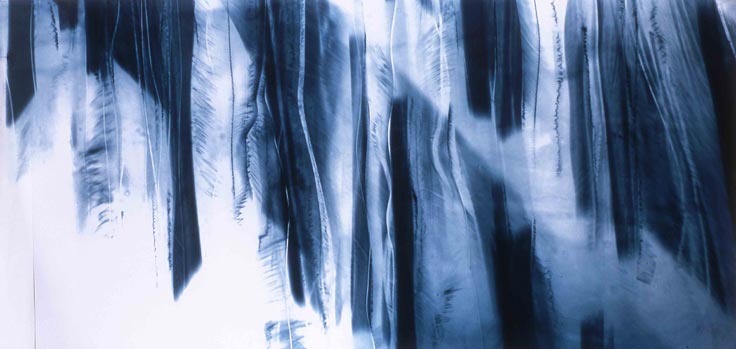
Photographic installation artist Katayoun Dowlatshahi interviewed by Gil Dekel. Gil Dekel: You are tracing light onto glass using a method called Carbon Photography. How did you develop the idea of ‘light drawings’? [1] Katayoun Dowlatshahi: In 1998 I spent a year as...
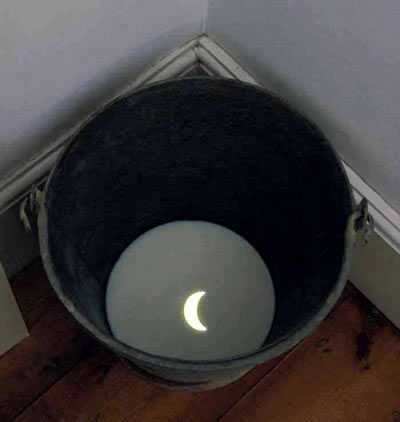
Installation artist David Johnson interviewed by Gil Dekel. Gil Dekel: Your work has undergone an interesting evolution over the years. [1] David Johnson: When I was young I used to paint and draw and make mono-prints. I studied architecture originally, but gave...
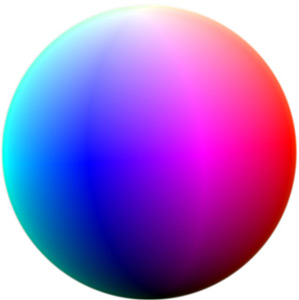
Installation artist Ken Devine interviewed by Gil Dekel. Gil Dekel: Your art project Colours of the Sphere looks at the ways in which people create meanings with the world around them and especially with colours. [1] Ken Devine: Yes, the project started ten years ago...
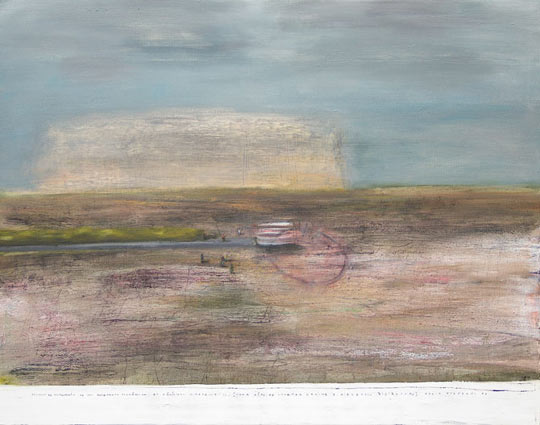
Interview with painter, photographer and installation artist Pablo Avendaño. Natalie Dekel: When was it that you first decided to paint or express yourself visually? [1] Pablo Avendaño: I cannot recall when it began except for the very early visits to the Prado with...
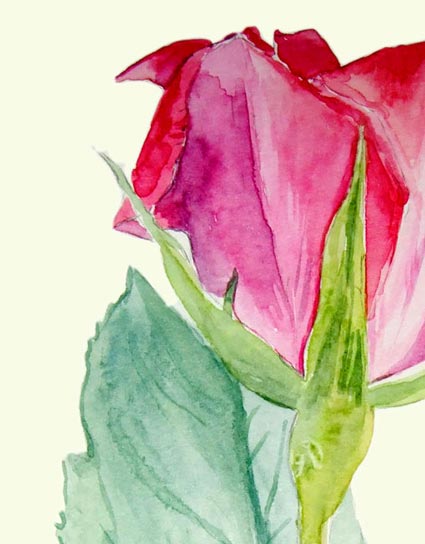
Watercolour painter Melanie Chan interviewed by Gil Dekel. Gil Dekel: You specialise in watercolour paintings of flowers. What do you see in the flower? [1] Melanie Chan: I see the beauty of nature in flowers, and I am amazed by their perfection and their symmetry....
Mandala painter, Barry Stevens, interviewed by Gil Dekel. Gil Dekel: Mandalas are usually round, or I should say circular around a centre. As such they do not seem to have an up or down, left or right. How do you then ‘plan’ the painting? [1] Barry Stevens: The...
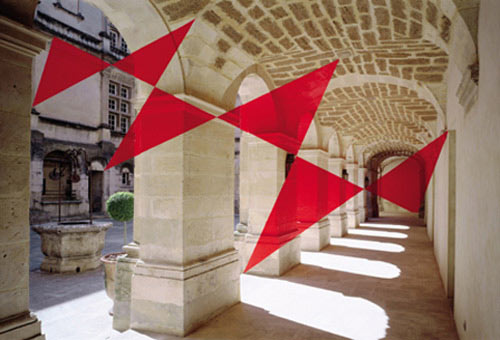
Perspective-localized painter, Felice Varini, interviewed by Gil Dekel. Felice does not paint on canvas but rather on architectural and urban landscapes, such as buildings, walls, and streets. His paintings have one vantage point (view point) from which the viewer can...
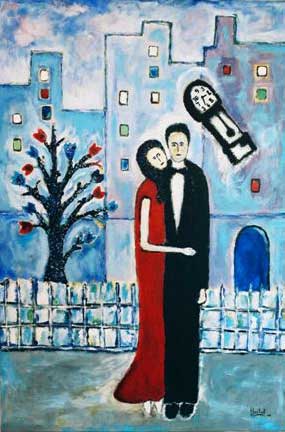
Painter, poet and philosopher Paul Hartal is interviewed by Gil Dekel. Gil Dekel: What is your view on the sources of creativity in art? [1] Paul Hartal: Creativity is a cognitive process that results in new outcomes. It generates original ideas and novel products....
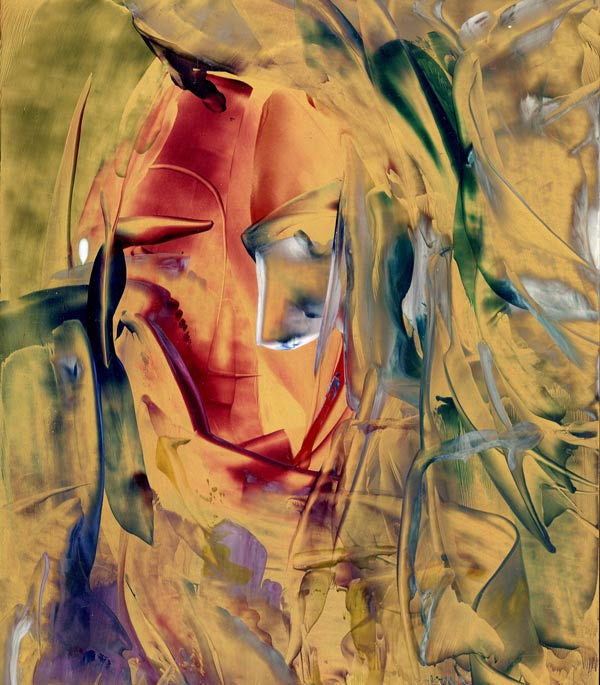
Portraits and Encaustic Wax painter, Natalie Dekel, interviewed by Gil Dekel. Gil Dekel: When did you start painting? Natalie Dekel: I was left-handed and my mother was worried that I will not be able to use my right hand. Where I was born and grew up, everyone had to...
Matt Manley (painter, teacher, digital artist, and illustrator of Rumi wall calendars published by Brush Dance) – interviewed by Natalie Dekel. Natalie Dekel: Your work seems a mix of symbols and memories – a puzzle leading the viewer...
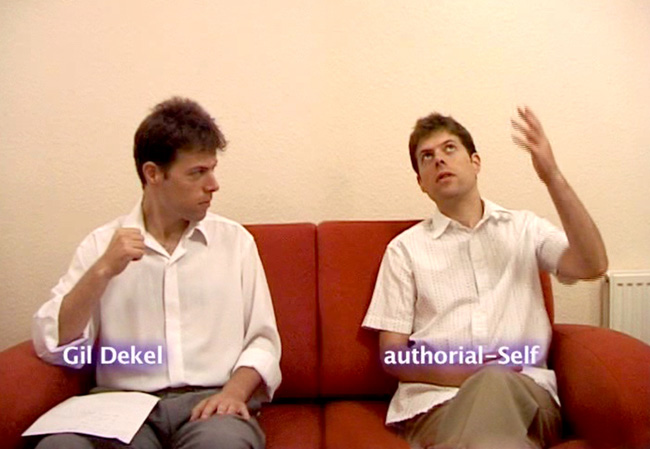
The authorial-Self, a ‘Muse’ of poetry, is interviewed by Gil Dekel. Gil Dekel: I am very happy to be able to interview my own ‘Muse’, my own creative self, and ask him about processes of inspiration in writing poetry. [1] I would like to thank you, the...
‘The Band of Brothers’ in an interview with Gil Dekel. Gil Dekel: This interview is taking place through an automatic-speech experiment, where spiritual intelligent forms (‘beings’) are channelled through a medium. So, can I start by asking...
Poet Alan Corkish interviewed by Gil Dekel. Gil Dekel: I get the feeling that your poetry is based mainly on telling a story, an event, rather than depicting a picture. Is this correct? [1] Alan Corkish: I’m not sure about what you mean Gil. Language is complex, I...
Poet Myra Schneider interviewed by Gil Dekel. Myra Schneider: Hi, Gil, welcome… would you like some tea? [1] Gil Dekel: That would be nice. [2] [getting tea] [3] Gil Dekel: Did you always live in London? [4] Myra Schneider: I have been living here a long time now,...
Poet Clive Wilmer interviewed by Gil Dekel. Gil Dekel: Hello, Clive… [1] Clive Wilmer: Nice to meet you, Gil, at last… [2] I wasn’t sure if this is Cambridge Central Station, because it looks so ‘open’; quite wide… [3] Yes, it’s an unusual lay-out...
Poet Maggie Sawkins interviewed by Gil Dekel. Gil Dekel: You have been writing since the age of nine. How does the process of writing poetry work for you? [1] Maggie Sawkins: I think that there are different processes for different poems. Sometimes it is two things...
Poet Sylvia Paskin interviewed by Gil Dekel. Gil Dekel: How do words come to you? [1] Sylvia Paskin: Often they come as a burst of emotion. Sometimes I hear or read something, or something happens to me. And around this set of feelings you find yourself writing about...
Poet Anne Stevenson interviewed by Gil Dekel. Gil Dekel: Can we talk about your creative process of writing? [1] Anne Stevenson: For me, writing poems is not so much a process as a way of feeling my way in the dark. Lines come to mind; I work them over in my head and...



 - Reading with Natalie, book here...